Quick Answer
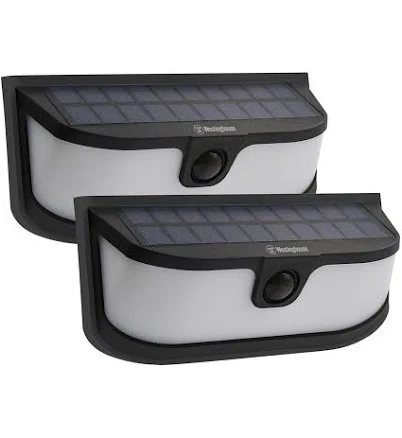
Westinghouse 1200 Lumen Solar LED Motion Activated Wall Lights
Top pick — Best for those prioritizing security and illumination for driveways or entrances.
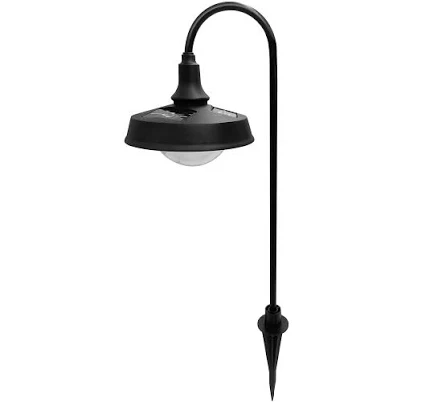
See full comparison →Better Homes & Gardens LED Solar Sconce Light
Top pick — Ideal for front porches or patios where style and function are equally important.
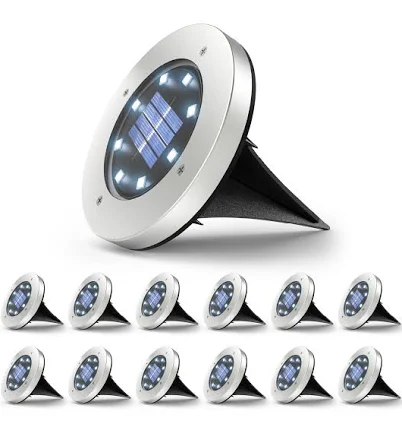
See full comparison →Sunco 12 Pack Solar Lights Outdoor Garden LED
Top pick — Excellent for covering long walkways or larger yards on a budget.
See full comparison →At a Glance
What to Look For
Panel Size and Placement
The solar panel is the engine of any garden light. Larger panels capture more energy on cloudy days and charge batteries faster on sunny ones. Always check whether the panel is integrated into the fixture or connected by a cable, since a separate panel gives you the freedom to position it in the sunniest spot while placing the light exactly where you need it aesthetically.
Battery Capacity and Chemistry
Battery capacity, measured in milliamp hours, determines how long your garden lights shine after dark. Lithium-ion chemistry holds a significant advantage over older alternatives, particularly in cold climates where battery performance can drop sharply. Look for replaceable batteries so you can extend the product's useful life without replacing the entire fixture after a few years.
Weather and Durability Ratings
Outdoor garden lighting solar must endure rain, frost, heat, and UV exposure year after year. IP65 is a practical minimum for reliable all-weather performance, protecting against water jets and dust ingress. Housing materials matter too: UV-stabilized plastics and powder-coated metals resist fading and corrosion far better than untreated alternatives, keeping your garden looking sharp through 2026 and beyond.
Lighting Modes and Controls
Modern solar garden lights frequently offer multiple operating modes including always-on dim, motion-activated bright, and timed combinations. Selecting a light with mode flexibility lets you adapt its behavior to different seasons, occasions, and security needs without buying additional fixtures. Some models also include dusk-to-dawn sensors that automate the on and off cycle entirely, removing any manual management.
Aesthetic Style and Scale
Solar garden lights come in an enormous range of styles from minimalist modern stakes to ornate lanterns and architectural wall sconces. Choosing a style that complements your existing outdoor furniture, fencing, and planting scheme creates a cohesive look. Scale matters equally: oversized fixtures can overwhelm a small courtyard while tiny path lights may look lost along a wide driveway.
How We Chose
When evaluating outdoor garden lighting solar options, we focus on the factors that genuinely affect long-term satisfaction rather than flashy specifications that rarely translate to real-world performance. Our approach centers on understanding how solar panels, battery capacity, and LED efficiency work together as a system. A light is only as good as its weakest component, so we look for balanced designs where the panel size is matched appropriately to the battery storage and the LED draw. We also weigh installation simplicity heavily, because the best solar garden light is one that actually gets installed and used. Mounting hardware, wire-free designs, and clear instructions all contribute to whether a product ends up illuminating your garden or sitting in a box. Durability matters enormously outdoors, so we consider weather resistance ratings, the quality of housing materials, and how well the product handles temperature swings across seasons. Finally, we look at how well each type of solar garden light serves its intended purpose, whether that is pathway marking, security deterrence, accent lighting, or flood illumination, because a light optimized for one job rarely excels at another.
How We Chose
When evaluating outdoor garden lighting solar options, we focus on the factors that genuinely affect long-term satisfaction rather than flashy specifications that rarely translate to real-world performance. Our approach centers on understanding how solar panels, battery capacity, and LED efficiency work together as a system. A light is only as good as its weakest component, so we look for balanced designs where the panel size is matched appropriately to the battery storage and the LED draw. We also weigh installation simplicity heavily, because the best solar garden light is one that actually gets installed and used. Mounting hardware, wire-free designs, and clear instructions all contribute to whether a product ends up illuminating your garden or sitting in a box. Durability matters enormously outdoors, so we consider weather resistance ratings, the quality of housing materials, and how well the product handles temperature swings across seasons. Finally, we look at how well each type of solar garden light serves its intended purpose, whether that is pathway marking, security deterrence, accent lighting, or flood illumination, because a light optimized for one job rarely excels at another.
Key Trade-offs
The central tradeoff in outdoor garden lighting solar is brightness versus runtime. Higher-lumen outputs demand more energy, which means either a larger solar panel, a bigger battery, or shorter operating hours. Shoppers frequently prioritize peak brightness without considering that a light running at full power for only two hours may leave a garden dark by midnight. A more modest output running all night often delivers better practical value. Another significant tradeoff exists between motion-activated and always-on modes. Motion sensors dramatically extend battery life and create a security deterrent effect, but they leave your garden unlit during quiet periods, which can undermine the decorative or wayfinding purpose you had in mind. Many modern solar garden lights offer selectable modes, which is worth prioritizing. Material quality presents a further tradeoff against upfront cost. Inexpensive plastic housings may crack or fade within a single season in harsh climates, while cast metal or high-grade polycarbonate units cost more initially but deliver years of reliable service. Finally, consider placement flexibility versus aesthetic integration. Spike-mounted path lights offer easy repositioning but may look utilitarian, while wall-mounted sconces integrate beautifully into architecture but require a commitment to a single location.
Key Trade-offs
The central tradeoff in outdoor garden lighting solar is brightness versus runtime. Higher-lumen outputs demand more energy, which means either a larger solar panel, a bigger battery, or shorter operating hours. Shoppers frequently prioritize peak brightness without considering that a light running at full power for only two hours may leave a garden dark by midnight. A more modest output running all night often delivers better practical value. Another significant tradeoff exists between motion-activated and always-on modes. Motion sensors dramatically extend battery life and create a security deterrent effect, but they leave your garden unlit during quiet periods, which can undermine the decorative or wayfinding purpose you had in mind. Many modern solar garden lights offer selectable modes, which is worth prioritizing. Material quality presents a further tradeoff against upfront cost. Inexpensive plastic housings may crack or fade within a single season in harsh climates, while cast metal or high-grade polycarbonate units cost more initially but deliver years of reliable service. Finally, consider placement flexibility versus aesthetic integration. Spike-mounted path lights offer easy repositioning but may look utilitarian, while wall-mounted sconces integrate beautifully into architecture but require a commitment to a single location.
What Matters Most
The single most important factor when shopping for outdoor garden lighting solar is solar panel quality and placement. A panel that receives fewer than four hours of direct sunlight daily will struggle to fully charge even a modest battery, leading to dim output and shortened runtime. Before purchasing, honestly assess your garden's sun exposure throughout the day and across seasons, since a spot that receives full summer sun may be heavily shaded in autumn. Battery chemistry is the second critical consideration. Lithium-ion batteries outperform older nickel-metal hydride alternatives in cold weather performance and cycle longevity, making them worth the modest price premium in most climates. IP weather resistance ratings tell you how well a light handles rain and dust ingress, and for year-round outdoor use you should look for a rating of at least IP65. Lumen output should be matched to the task: pathway lights typically need far fewer lumens than a security flood light, and over-specifying brightness in a decorative context can actually detract from ambiance. Color temperature is an often-overlooked factor that dramatically affects garden atmosphere. Warm white tones in the range of 2700K to 3000K create an inviting, relaxed feel suited to entertaining spaces and flower beds, while cool white or daylight tones work better for task-oriented security lighting. Finally, consider the warranty and the manufacturer's support reputation, because solar garden lights are exposed to the harshest conditions your climate can produce, and a solid warranty signals confidence in the product's durability.
What Matters Most
The single most important factor when shopping for outdoor garden lighting solar is solar panel quality and placement. A panel that receives fewer than four hours of direct sunlight daily will struggle to fully charge even a modest battery, leading to dim output and shortened runtime. Before purchasing, honestly assess your garden's sun exposure throughout the day and across seasons, since a spot that receives full summer sun may be heavily shaded in autumn. Battery chemistry is the second critical consideration. Lithium-ion batteries outperform older nickel-metal hydride alternatives in cold weather performance and cycle longevity, making them worth the modest price premium in most climates. IP weather resistance ratings tell you how well a light handles rain and dust ingress, and for year-round outdoor use you should look for a rating of at least IP65. Lumen output should be matched to the task: pathway lights typically need far fewer lumens than a security flood light, and over-specifying brightness in a decorative context can actually detract from ambiance. Color temperature is an often-overlooked factor that dramatically affects garden atmosphere. Warm white tones in the range of 2700K to 3000K create an inviting, relaxed feel suited to entertaining spaces and flower beds, while cool white or daylight tones work better for task-oriented security lighting. Finally, consider the warranty and the manufacturer's support reputation, because solar garden lights are exposed to the harshest conditions your climate can produce, and a solid warranty signals confidence in the product's durability.
Our Picks
Westinghouse 1200 Lumen Solar LED Motion Activated Wall Lights
Best OverallPros
Cons
Better Homes & Gardens LED Solar Sconce Light
Best ValuePros
Cons
Sunco 12 Pack Solar Lights Outdoor Garden LED
Best PremiumPros
Cons
Who Should Buy What
Westinghouse 1200 Lumen Solar LED Motion Activated Wall Lights
Best OverallBest for those prioritizing security and illumination for driveways or entrances.
View in Comparison →Better Homes & Gardens LED Solar Sconce Light
Best ValueIdeal for front porches or patios where style and function are equally important.
View in Comparison →Sunco 12 Pack Solar Lights Outdoor Garden LED
Best PremiumExcellent for covering long walkways or larger yards on a budget.
View in Comparison →Who Should Buy What
Westinghouse 1200 Lumen Solar LED Motion Activated Wall Lights
Best OverallBest for those prioritizing security and illumination for driveways or entrances.
View in Comparison →Better Homes & Gardens LED Solar Sconce Light
Best ValueIdeal for front porches or patios where style and function are equally important.
View in Comparison →Sunco 12 Pack Solar Lights Outdoor Garden LED
Best PremiumExcellent for covering long walkways or larger yards on a budget.
View in Comparison →